


Labiaplasty Surgery – Is It Right For You?

Reviewed by Foad Nahai, MD
Below-the-belt plastic surgery, including labiaplasty, is growing in popularity. Women turn to these procedures for a host of reasons. Some may be seeking relief from genital pain, while others may have cosmetic concerns about the look of their vagina. Still others may be hoping to enhance their sexual satisfaction. Some transgender women may undergo labiaplasty following gender reassignment surgery.
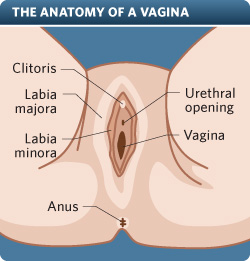
Labiaplasty is a surgical procedure to trim and shape the vagina’s inner lips (labia minora), outer lips (labia majora) or both. The labia minora are the inner flaps of skin that cover the clitoris and vagina. The labia majora are the parts of the labia on the outside of the body. The labia may be elongated or asymmetrical as a result of sexual intercourse, childbirth, genetics or the aging process.
The American Congress of Obstetricians and Gynecologists is currently against this procedure, having stated that the risks outweigh the benefits.
Labiaplasty Candidates
Candidates include women with enlarged inner and outer vaginal lips that cause pain or make them feel self-conscious. Long labia may cause pain during sexual intercourse, exercise or even while wearing skinny jeans. Fully developed young women and adult women who are in good health make the most appropriate candidates. Transgender women may also be candidates for this procedure following vaginoplasty, a genital reconstructive procedure.
The surgery is not designed to enhance sexual pleasure or satisfaction. If your goal is to increase sexual satisfaction, talk with your surgeon about other procedures.
Labiaplasty is not the only type of cosmetic surgery that can be performed on the vagina. Vaginal rejuvenation, for example, involves tightening the vaginal and perineum areas, which can become stretched during childbirth. Some surgeons suggest vaginal rejuvenation increases sexual pleasure for both partners.
Labiaplasty Risks
The American Congress of Obstetricians and Gynecologists has come out against cosmetic surgery of the vagina. The group stated that the risks of the procedure outweigh its benefits at this time.
Risks include:
- Infection
- Bleeding
- Temporary numbness
- Asymmetry between the inner and outer labia lips
- Pigmentation changes
- Decreased feeling in that area
- Pain
- Excess scar tissue buildup (appearing as lumps on the treated area)
- Hematoma (break in blood vessel causing localized blood-filled area or blood clot)
- Puckering or creases of the skin
- Sexual dysfunction
Preparing for the Procedure
It is a good idea to stop smoking and consuming alcohol for at least a week before your surgery. Talk to your surgeon about ways to quit smoking for good.
Your plastic surgeon will likely suggest that you stop taking certain medications, including aspirin, non-steroidal anti-inflammatory drugs (NSAIDs) and blood thinners, all of which can increase bleeding risk.
Certain herbal remedies, including vitamin E, omega-3 fatty acids, green tea and ginkgo biloba, also may increase bleeding risk during and after surgery.
Do not have sexual intercourse the night before your labiaplasty surgery.
The Labiaplasty Procedure
Labiaplasty is usually performed with a local anesthetic on an outpatient basis. The surgery takes about two hours.
During surgery, larger or uneven inner vaginal lips are cut and shortened using specialized scissors, a scalpel or a laser. The appropriate incision location depends on many individual factors, including the configuration, texture and size of the labia.
In addition, the labia majora, on the outside of the body, can be reduced with either surgery or liposuction, if needed. A hoodectomy, which exposes the clitoris in an attempt to increase sexual stimulation, may be performed at the same time.
The doctor will then suture the incision(s) closed with dissolvable stitches.
(These procedural steps will differ in the cases of transgender women.)
Recovery
After surgery, you can’t have intercourse for about one month. Your genitals will be tender and swollen for several weeks, and your labia and the surrounding area may be slightly bruised.
Oral medications can reduce pain, and antibiotics may be prescribed to reduce the risk of infection after your surgery.
You will be asked to avoid any heavy, strenuous exercise for three or more weeks after surgery. Tampons should not be used in the 10 days after your surgery, but you will need to wear a pad for at least one week due to postsurgical bleeding.
Labiaplasty Questions to Ask Your Surgeon
Get a printer friendly version of this list.
- Am I a good candidate?
- How many labiaplasty procedures have you performed?
- How often do you perform this surgery?
- Are you board-certified and by what medical board?
- Do you have before-and-after pictures of women who have had the procedure?
- Can I speak to one of your former patients?
- What are the benefits of the procedure for me, and why do you feel they outweigh the risks?
- What guidelines should I follow before surgery?
- What type of instrument will you be using to trim my labia?
- Is labiaplasty painful?
- How much downtime is there after labiaplasty surgery?
- Will the procedure enhance my sexual function?
- Are there any other surgeries that can be done with labiaplasty to improve the aesthetic and functional results?
- How long must I wait to have intercourse again after the labiaplasty?
- Will there be scars?
- When will the stitches typically dissolve?
- How much will my labiaplasty cost?
- Will insurance cover the cost?
- Will intercourse be painful the first time after the procedure?
- What if I am unhappy with the results?
Consult a Qualified Surgeon
The evaluation of surgical skills specifically relating to labiaplasty is not required for certification with the American Board of Plastic Surgery. There are no specific licensing requirements or required educational courses to perform the procedure. So you need to do two things:
- Select a board-certified plastic surgeon, a board-certified gynecologist or a board-certified urologist
- Make certain the surgeon has years of specific labiaplasty experience and expertise.
- Transgender women should seek out a surgeon who has experience performing gender reassingment labiaplasty.
Begin your search for a qualified surgeon now.
About the Reviewer of This Article
Foad Nahai, MD, FACS, is a board-certified plastic surgeon and a Fellow of the American College of Surgeons. Dr. Nahai was the 2008-2010 president of the International Society of Aesthetic Plastic Surgery (ISAPS). In addition, he is a past president of the American Society for Aesthetic Plastic Surgery (ASAPS), a former director of the American Board of Plastic Surgery, and current editor-in-chief of Aesthetic Surgery Journal. He completed medical school in England and his post-graduate surgical training at Johns Hopkins University in Baltimore and Emory University in Atlanta. Before joining Atlanta’s Paces Plastic Surgery in 1998, Dr. Nahai practiced at the Emory Clinic, where he was professor of plastic surgery at Emory’s School of Medicine.