


Laser Liposuction (SmartLipo, Slim Lipo, Cool Lipo, ProLipo Plus): Is it for You?
Reviewed by Scott R. Miller, MD, FACS
You’re feeling grumpy and lumpy, fretting about those stubborn pockets of fat that don’t budge despite your dutiful workouts and healthy diet. Then the commercial on the car radio catches your ear. Why not laser away that fat, just blast it out of your life, quickly and painlessly?
Laser liposuction — or more accurately, laser-assisted liposuction — was first introduced in 2007 with SmartLipo. Since then, SmartLipo has been joined by other players, including Slim lipo, Cool lipo and ProLipo Plus.
What Is Laser Liposuction?
Laser liposuction is one of many advances in liposuction surgery, which is one of the most commonly performed cosmetic surgery procedures in the United States and many other countries. Other advances include water-assisted liposuction (Body-Jet) and ultrasound-assisted liposuction procedures such as Vaser-assisted liposuction.
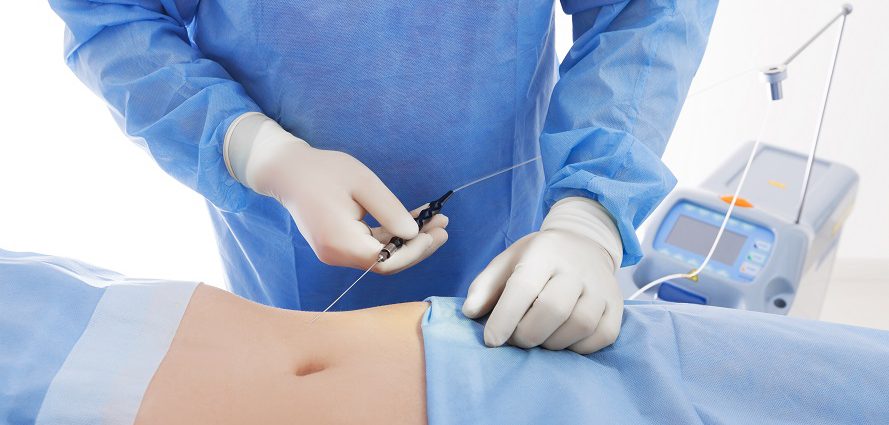
Laser-assisted liposuction uses laser energy. The procedure is typically performed on an outpatient basis under local anesthesia or sedation anesthesia, depending on the amount of fat that will be removed.
The concept is simple: lasers heat the fat, turning it semi-soft and making it easier to remove via liposuction.
Just as in traditional liposuction, fluid is first injected under the skin in the area where fat is to be removed. This fluid contains a mixture of saline, local anesthetic and epinephrine (which constricts blood vessels and minimizes blood loss).

Next, the laser energy is applied, and fat is suctioned from the body via cannulas (thin tubes) inserted through small incisions in the skin.
In addition to softening the fat for easier removal, the laser energy heats skin cells, stimulating the production of collagen. Collagen is the main structural protein found in skin, but its production slows with advancing age. Thus, by promoting the production of collagen, the laser energy is believed to not only aid in the removal of fat but also improve the skin’s appearance.
Are You a Laser Lipo Candidate?
If you have mild to moderate amounts of excess fat and skin laxity, laser lipo may work for you. Skin tends to become lax after about age 35.
If you are about 20 percent overweight or less, you are probably a good candidate for liposuction of the face, abdomen or other body area. The procedure is not a solution for obesity. If you are in good physical condition and have good muscle tone, you will likely respond very well to laser liposuction because your muscles will provide underlying support for the tissues.
Laser lipo can be used on the thighs, abdomen, arms, knees, face and neck, as well as on back fat rolls. It’s also useful in treating gynecomastia (excess male breast tissue), or ”man breasts.”
Preparation for Laser Liposuction
You should ask your physician for specific instructions, such as whether to stop taking certain medicines before your surgery. If you smoke, it is important to kick the habit before laser liposuction or any surgical procedure. In addition to all of its other negative health effects, smoking also impairs the healing process.
Results of Laser Liposuction
After the procedure, you will likely notice a better silhouette and profile in the treated areas. Results can be noticeable after a week with laser liposuction, while traditional liposuction can take two to four weeks. The results may be more immediate with laser lipo because the fat removal is reported to be less traumatic. Besides a reduction in the amount of fat, you can hope for some improvement in skin tightness. Advocates consider this a plus over traditional liposuction. It may be several weeks to months before you notice the skin changes because it takes time for the body to produce new collagen. It is the new collagen that gives the skin a tighter-looking appearance.
Bruising can be less extensive with laser liposuction than with traditional lipo because lasers can coagulate small blood vessels.
Swelling should be expected, and your doctor may order a compression garment be worn for a variable period of time.
You can expect to be back to your normal activities in three to five days. Strenuous exercise should be put off for three or four weeks, typically. Ask your surgeon for specific advice.
Cost of SmartLipo and Other Laser Liposuction
Costs of laser liposuction vary greatly, depending on the body area and the extent of fat to be removed, as well as the area of the country you will have it done.
According to figures assembled by a group of laser liposuction physicians who use different brands, some surgeons charge different rates for different areas of the body, while others have a flat rate for each area, giving discounts as areas are added. Following are the average costs cited by this group for laser liposuction, although you may find fees in your area lower or higher:
- Upper abdomen, $4,500
- Lower abdomen, $3,500
- Back fat, women, $2,500
- Back fat, men, $3,000
- Knees, $4,000
- Thighs, $2,500
- Buttocks, $3,000
- Neck or Face or Chin or Jowls, $2,500
- Hips, $2,500
Risks of Laser Liposuction
Some laser liposuction risks are the same as traditional liposuction risks, including possible irregularity in your skin contour. Fluid can collect beneath the skin. Infection, scars, blisters and burns are other possibilities. Added to these is the potential for fat necrosis (death of fat cells) when a laser is used. In addition, you may not be happy with the amount of fat removed, and the improvement in your skin’s appearance may not be as great as you had hoped for. Be sure to carefully consider every risk of liposuction before deciding to undergo the procedure.
Laser liposuction does have its fair share of critics. Many board-certified plastic surgeons will tell you that it’s just a gimmick that adds little to the effects of traditional liposuction while increasing the expense. The skeptics are quick to point out that there is no scientific evidence that laser lipo improves outcomes, tightens skin or speeds recovery.
Choose a Board-Certified Plastic Surgeon for Your Laser Liposuction
Laser liposuction is considered a surgical procedure. Therefore, your surgeon needs to be experienced in the technique, plus understand the aesthetics of good body contour. A board-certified plastic surgeon who has trained in the technique fulfills those requirements. Start your search for a local surgeon now.
Competition in the laser liposuction market is intense, making it a challenge for consumers to pick between brands — and, no doubt, a challenge for physicians to choose one laser over another. You should consider interviewing more than one plastic surgeon, asking first which laser or lasers he or she uses, and then checking out the company website before your consultation to find out about its benefits and risks. You could also ask your doctor why he or she chose SmartLipo over Cool lipo and other brands, for instance.
About the Reviewer of This Article
Scott R. Miller, MD, FACS, is a member of the editorial advisory board for Consumer Guide to Plastic Surgery. A board-certified plastic surgeon, Dr. Miller practices in La Jolla, California. [More about Dr. Miller.]