


Facelift Variations
Reviewed by Scott R. Miller, MD, FACS
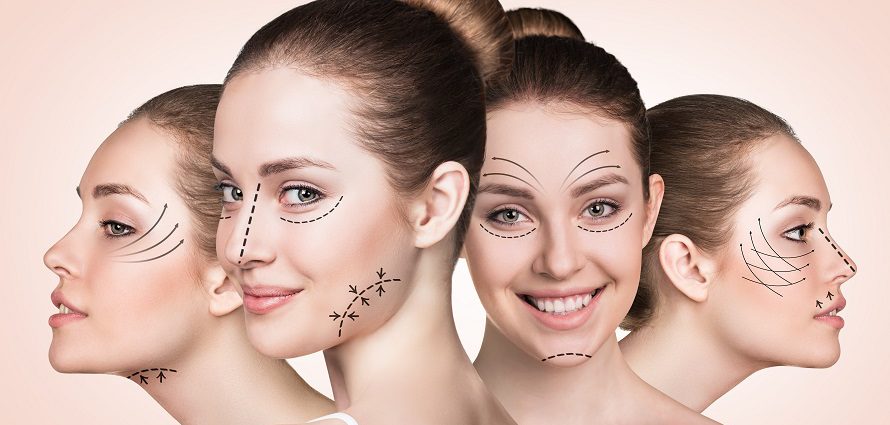
There are many types of facelifts.
In general, facelifts differ by:
- Type of incision
- The number of tissue layers treated during the procedure
- The area of the face
- The degree of invasiveness
Although facelifts are often viewed as more feminine procedures, male facelift surgery is relatively common. Sometimes facelifts are done in combination with other procedures.
Here you will find basic information on the main types of facelifts, including.
- SMAS
- Deep plane lift
- Short scar facelift
- Endoscopic facelift
- The mid-facelift
- Thread lift
- Secondary facelift
- Combination procedures
- Nonsurgical stem cell facelifts
The SMAS Lift
The first facelift simply cut the skin on the face and pulled it back. However, the skin kept falling, as there was nothing to support it in its new, higher position. Surgeons soon realized they were not going deep enough to achieve a lasting result.
Enter the superficial musculoaponeurotic system (SMAS) lift.

This procedure lifts the superficial top layers of skin as well as deeper tissues of the face and neck (also known as the SMAS). These tissues tend to grow lax and sag with advancing age.
During the SMAS lift an incision is made at the temple above the hairline and is extended downward. This cut is made along the creases in your skin, in front or at the edge of the ear, below the ear lobe, and behind your ear. The surgeon then elevates the SMAS, tightens it and removes excess tissue. He or she uses stitches to keep it in its new, higher position.
Best candidates: Anybody aged 45 and up with neck laxity, some jowling and some mid-face sagging.
Highlights: This is the gold standard of facelifts in terms of correction and longevity balance with safety.
Lowlights: Compared with a short scar lift, the SMAS takes longer to perform, has a slightly longer scar and requires a longer recovery period.
Cost of SMAS: $10,000 to $15,000
The Deep Plane Lift
Duringthe deep plane lift, the surgeon lifts and repositions the SMAS, but he or she goes even deeper than they would with the traditional SMAS lift.
The procedure often requires incisions along the hairline so that the facial muscles and upper fatty tissue layers can be easily lifted and repositioned in the area of the cheekbone and mid-face. This incision is extended downward, along the natural creases in the skin in front of the ear, below the ear lobe, and behind the ear.
The surgeon then separates the skin and muscles of the face from the deeper facial tissues. In some cases the skin is removed. But in others the skin and muscle tissues are reshaped. After the tightening or removal of excess skin, the skin is redraped, sutured or stapled in place.
Best candidate: Older people with severe facial sagging and laxity.
Highlights: The deep plane lift creates dramatic changes in the mid-face area, including the cheeks, nasolabial folds (nose to mouth), jaw line and chin. This lift is long-lasting — about 10 to 15 years.
Lowlights: The deep plane lift is more extensive than other facelifts, which can prolong the healing process. The surgeon works pretty close to the nerves, so the risk of facial nerve injury or weakness is greater with the deep plane lift.
Cost of the deep plane lift: $12,000 to $15,000
The Short Scar Facelift
This type of facelift basically refers to the incision or scar pattern. Many surgeons make an S-shaped incision at the temple or in front of the ear. The incision does not extend behind the ear, as it would in a more traditional facelift. The small incision still lets doctors re-suspend the tissues that support the smile lines and jowls and tighten a moderate amount of loose skin.
The MACS (the Minimal Access Cranial Suspension lift ) technique is an example of the short scar facelift. During the MACS lift, the incision stops right at the ear lobe.
Ideal candidate: Younger people in their 40s and 50s with minimal to moderate excess skin who do not need major neck work. This procedure is also ideal for someone who wants to minimize scars.
Highlights: The more limited surgery means less swelling and bruising, and a shorter recovery time. Bonus: People who have short scar lifts can wear their hair pulled up In the back without anyone seeing a scar. This may be so with other techniques, but is not always the case.
Lowlights: The surgeon may not be able to eliminate loose, sagging skin in the lower face and neck.
Cost of the short scar facelift: $6,000 to $10,000, depending on the extent of the surgery
Endoscopic Facelift
This high-tech facelift uses an endoscope, a pencil-shaped probe with a tiny camera attached to it. The endoscope transmits video images of the internal facial structures onto a TV screen in the operating room, letting the surgeon see beneath the skin.
The endoscope is inserted viasmall incisions that are often less than one inch long and thus, easily hidden. The typical endoscopic facelift requires three or more short incisions concealed in the hairline and/or behind the ears. Many types of facelifts can be done endoscopically.
Ideal candidate: Relatively younger people without a significant amount of excess skin and no neck sagging.
Highlights: Smaller incisions mean less risk of sensory loss from nerve damage. People who have endoscopic facelifts bleed less, bruise less and have less swelling. They tend to recover more quickly and are often able to return to work and other activities within a week.
What’s more, endoscopic facelifts can generally be performed on an outpatient basis, under local anesthesia. As a result, they may be less expensive than traditional facelifts because they don’t require general anesthesia or an overnight stay in a hospital.
Lowlights: There is no endoscopic neck lift. This type of lift is effective only for cheek sagging.
Cost of endoscopic facelift: $6,000 to $10,000
The Mid-Facelift
A mid-facelift uses small cuts in the hairline and the inside of the mouth. The natural fatty layer over your cheekbones is lifted and repositioned.
A mid-facelift improves nose-to-mouth lines and lifts sagging cheeks. A mid-facelift is included as part of the SMAS or deep plane lift because the mid-face area is elevated along with rest of the tissues.
An isolated mid-facelift can be done endoscopically or through the lower lid, along with eyelid surgery (blepharoplasty).
Ideal candidates: People between 40 and 50 whose cheeks are sagging with skin folds or laxity in the nasolabial area.
Highlights: A subtle freshening-up with minimal risk and downtime.
Lowlights: Not a night-and-day difference. The mid-facelift offers modest, subtle improvements. The lower lid approach does carry risk of lower lid swelling.
Cost of mid-facelift: $6,000 to 10,000
The Thread Lift (Sometimes Called Feather Lift or Aptos Lift)
A thread lift or feather lift may be considered a nonsurgical enhancement. It is intended to lift sagging facial skin without invasive surgery.
The doctor uses a barb suture technique: tiny suture barbs that act as a hook are used to gather skin layers upward, thereby tightening the skin. The thread itself, which has small barbs to hold the skin in place, is not reabsorbed or dissolved but remains in place. No skin is cut away, and only the barbs on the threads and subsequent fibrous tissue provide the lifting effect.
Ideal candidates: The thread lift is for people who do not have very serious sagging or loose skin, such as people in their 30s and 40s.
Highlights: The thread lift can be performed under local anesthesia. It can be done as an adjunct with other facelifts to support the tissues. It is cheaper and requires less downtime than traditional facelifts.
Lowlights: While much hyped in the media, the thread lift is really not all that effective as a stand-alone facelift. It merely acts as a bridge until a deep plane facelift is more appropriate.
Cost of a thread lift: $1,500 to $4,500
Secondary Facelift Surgery
Unfortunately, a facelift doesn’t stop aging indefinitely. Nothing does. Eventually your skin will start to loosen and sag again.
Secondary facelifts are not uncommon. They are done to reposition and tighten the facial skin, underlying tissue and/or muscles.
Another reason for a secondary procedure is that after having a facelift, the untreated areas of your face may appear more lax than the treated area. You may want a secondary facelift to address areas not targeted initially for a more consistent, balanced appearance.
The extent of the secondary facelift depends on the extent of the first facelift and the effects of natural aging. For example, many deep plane facelift patients are fully satisfied with a secondary “tuck” procedure and do not need a more extensive secondary procedure that may be required by someone who had a less invasive initial facelift.
Facelifts Do Not Affect All Facial Areas
Your facelift treatment plan may include other plastic surgery procedures and minimally invasive procedures to provide a full facial rejuvenation.
The facelift itself involves improvements to the jaw line, cheeks and nasiofold area which comprises your nose to the corners of your mouth, but not necessarily the neck, brow, forehead and eyelids. During your consultation with a plastic surgeon, he or she will evaluate your face to develop a comprehensive treatment plan.
During a facelift procedure, your plastic surgeon may perform eyelid surgery, as mentioned above. It may also be performed after you recover from the facelift.
A forehead lift (brow lift) may also be done during the facelift or after the recovery period. The endoscopic brow lift procedure is an alternative that is less invasive than the traditional brow lift.
You may consider a neck lift to improve the appearance of your neck and provide a more balanced, youthful appearance.
Lip enhancement procedures such as lip augmentation and lip lifting surgery can add volume and smoothness to thin, wrinkled lips.
Facelift Risks and Recovery
The type of facelift you choose will influence your risk profile and likely recovery time. Facelift surgery risks include infection, anesthesia complications, bleeding, scarring and other complications associated with surgical procedures. The degree of risk will depend in part on the extent of the procedure. For example, a deep plane lift will likely entail greater risk than an endoscopic facelift.
Similarly, your facelift recovery time will also depend in part on the extensiveness of your chosen facelift. The SMAS lift, for example, requires more downtime than the short scar facelift.