


Breast Implants – Incisions & Placement
Medically Reviewed by: Brian Reagan, MD, FACS
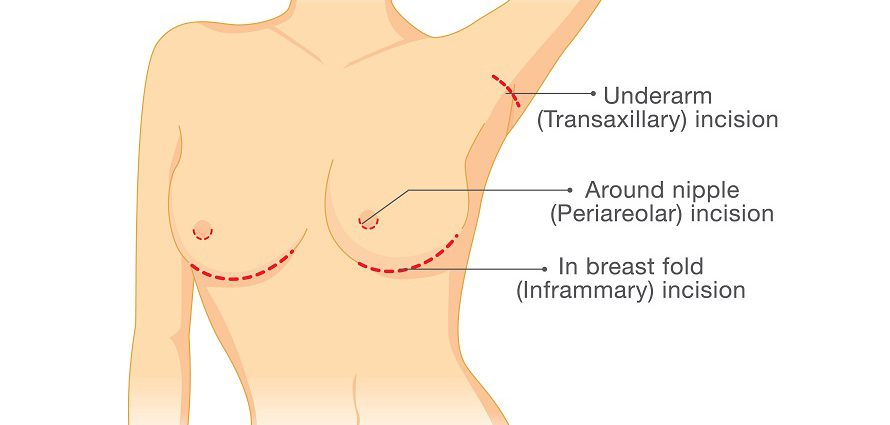
During breast augmentation surgery, breast implants are inserted under the natural breast tissue or behind the chest muscles through carefully placed incisions. Several choices exist regarding the location of these incisions.
The incision placement decision is determined in consultation with your surgeon and is based on your anatomy, your desired outcome and the size and shape of the breast implants.
Four main types of incision patterns are used during breast augmentation:
- Inframammary Incision (crease or fold incision)
- Periareolar Incision (nipple incision)
- Transaxillary Incision (armpit incision)
- TUBA Incision (belly button or transumbilical incision)
Inframammary Incision
The inframammary incision is placed near the crease under the breasts, slightly above where the breast and rib cage meet.
Periareolar Incision
The periareolar incision (nipple incision) is placed between your areola (the pink or brownish skin that surrounds your nipple) and your breast skin.
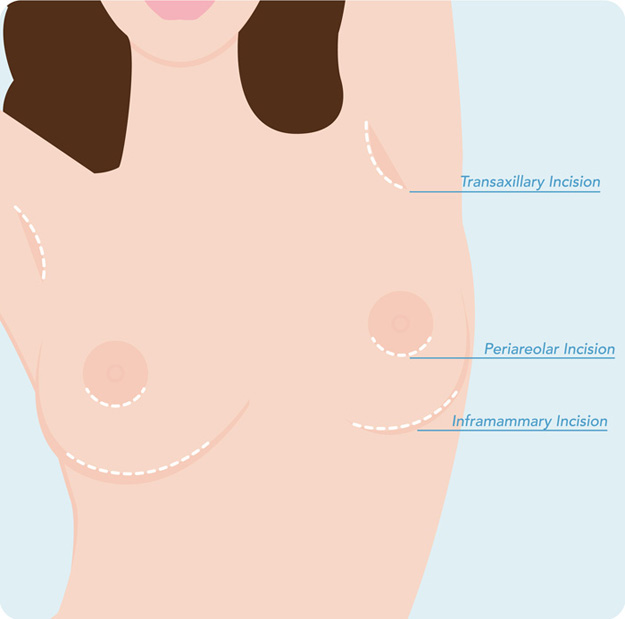
Click on image to view larger Image courtesy of Clinic Compare
Transaxillary Incision
The transaxillary incision (armpit incision) is placed in the armpit.
TUBA Incision
The TUBA incision (belly button, navel, or transumbilical incision) is made within the navel. Learn more about “scarless” TUBA incisions.
The only way to determine which incision pattern is right for you is to consult with a board-certified plastic surgeon. He or she will explain the advantages and disadvantages of the various incision lines and help decide which is most suited to your anatomy and aesthetic goals. Begin your search for the right surgeon now.
Deciding where your breast implants will be placed is one of the many decisions you will make with your board-certified plastic surgeon.
The ideal breast implant placement depends on the size of the breast implants, your anatomy, the quality of your breast skin and your cosmetic goals. Discuss the various breast implant placement options and your preferences with your surgeon during your consultation. Rely on his or her expertise about which type of placement is best suited to your anatomy. Start the process now.
Breast Implant Placement
Your main breast implant placement options are:
- Subglandular implant placement
- Partial submuscular implant placement
- Full submuscular implant placement
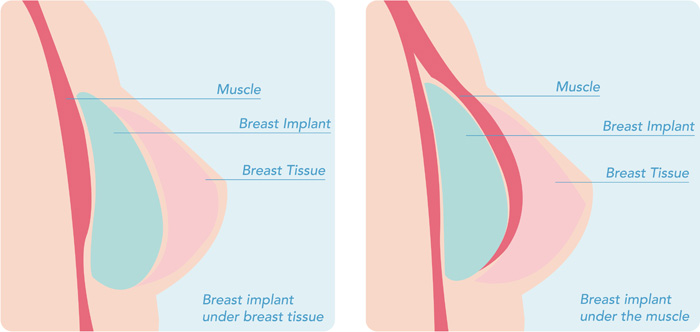
Click on image to view larger Image courtesy of Clinic Compare
Consumer Guide to Plastic Surgery helps make your decision easier by providing articles describing the pros and cons of each placement alternative.
Subglandular Implant Placement
With subglandular implant placement, the saline or silicone breast implant is positioned under your breast tissue but above your pectoral or chest muscles. Implants placed using the subglandular implant method are often colloquially referred to as “overs” because they are over the chest muscles.
Partial Submuscular Implant Placement
Partial submuscular implant placement involves inserting the silicone or saline breast implant under your breast tissue and partially under your pectoral and other chest muscles. Because they are partially under the muscles, implants placed using this technique may be called “unders” or “partial unders.”
Full Submuscular Implant Placement
With full, or complete, submuscular implant placement, the breast implant is placed under your pectoral and chest muscles. Implants in this placement location may be referred to as “unders.”
(Images courtesy of Clinic Compare)